
Finding the right pair of jeans or trousers is not just about looks. It is about comfort, durability, and value for money. A well-chosen pair can last for years and work across many outfits. However, with so many options available today, it can be hard to know what to look for. This guide will walk you through everything you need to know to make a smart choice.
Why Quality Matters More Than Price
Many people assume that a higher price always means better quality. That is not always true. Some affordable brands offer excellent construction, while some expensive labels cut corners on materials. Therefore, learning to assess quality yourself is one of the most useful skills you can develop as a shopper.
A quality pair of trousers will hold its shape after washing. It will not fade quickly or develop holes at the seams. Additionally, it will feel comfortable from the very first wear. These are the signs that a garment was made with care.
How to Read the Fabric Label
The fabric label tells you a lot before you even try the item on. Look for natural fibers or quality blends. Here is what to watch for:
- Cotton or cotton-rich blends (above 95%) tend to breathe well and feel soft against the skin.
- A small amount of elastane (1–3%) adds stretch without making the fabric feel synthetic.
- Raw denim or selvedge denim indicates a traditional weaving method that produces a denser, longer-lasting fabric.
- Linen and wool blends are excellent choices for trousers, especially in warmer or smarter settings.
Avoid fabrics that feel thin or plasticky. Polyester-heavy blends may look fine at first, but they often pill quickly and trap heat. Furthermore, they do not age as gracefully as natural fibers.
Checking the Stitching and Construction
Good stitching is one of the clearest signs of a well-made garment. Turn the item inside out before buying if you can. Look at the seams along the inner leg and waistband. They should be neat, tight, and even. Loose or uneven stitching is a sign of poor quality.
Check the number of stitches per inch. More stitches generally mean stronger seams. Additionally, look for reinforced stitching at stress points. These include the crotch seam, belt loops, and the top of the pockets. These areas bear the most strain during everyday wear.
Double-stitched or chain-stitched seams are common in high-quality denim. They add durability and a classic finish. However, a single flat seam done neatly is also acceptable in well-made trousers.
Evaluating the Waistband
The waistband is often overlooked, but it tells you a great deal about overall construction. A quality waistband should feel firm and structured. It should not fold or buckle when you put the garment on.
Look for a waistband that is fully lined or has a curtain lining on the inside. This prevents the waistband from curling or stretching over time. On jeans, a wide and thick waistband usually signals better construction. On dress trousers, a neat, flat waistband with a clean finish is the goal.
Belt loops should also be securely attached. Give them a gentle tug. They should not shift or feel loose. Poor belt loop attachment is a common sign of rushed manufacturing.
Pockets: Function and Finish
Pockets might seem like a minor detail, but they reveal a lot about how carefully a garment was made. Reach your hand inside the pocket. It should be deep enough to be useful. Shallow pockets are a common sign of cost-cutting.
The pocket lining material matters too. A thin or rough lining will wear out quickly and feel unpleasant. Quality garments often use a soft, durable cotton or poly-cotton blend for pocket bags.
On the outside, the pocket openings should lie flat against the body. They should not gape or pull when you stand naturally. Additionally, any pocket flaps or button fastenings should feel secure and align properly.
Assessing the Fit Across Key Areas
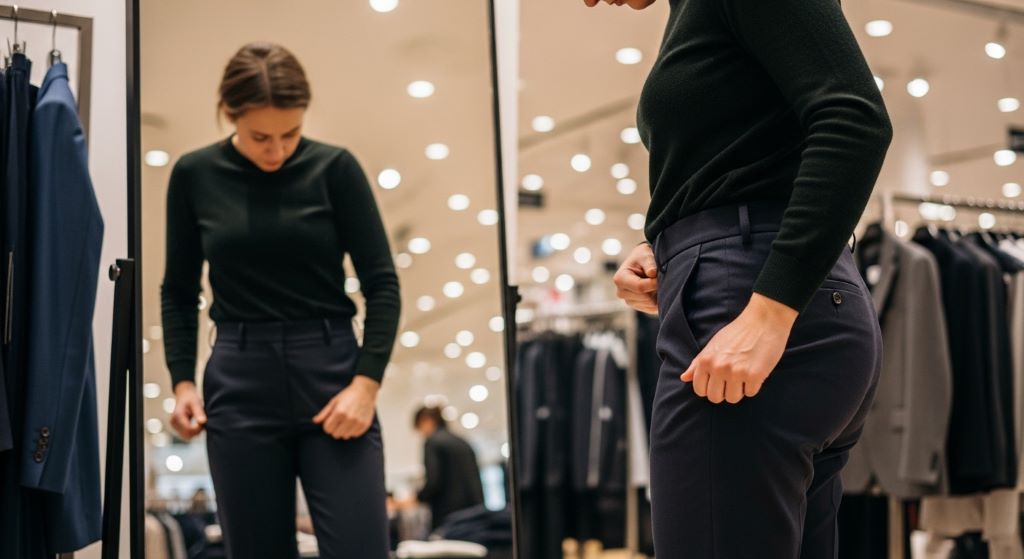
Fit is personal, but there are universal principles that apply to everyone. A well-fitted pair of jeans or trousers should feel comfortable without being restrictive. Here is how to assess fit across the main areas of the body:
The Waist and Hip Area
The waistband should sit where you intend to wear it without digging in or sliding down. There should be no pulling or bunching of fabric across the hips. If you see horizontal stress lines across the seat or the front, the fit is too tight.
The Thigh and Seat
The seat should have a smooth fit without excess fabric sagging behind you. At the same time, it should not stretch tightly across the buttocks. The thigh area should allow you to walk and sit freely. Pinching or pulling here means the cut is wrong for your body shape.
The Knee and Hem
The fabric should fall smoothly from the knee to the hem. There should be no twisting of the leg seam. Twisted seams often mean the garment was not cut correctly, and this becomes more noticeable after washing.
The hem length is also important. Trousers that are too long will drag on the ground and wear out quickly. Most good tailors will advise a slight break at the shoe, meaning the fabric rests just lightly on top of the foot.
Hardware and Details That Signal Quality
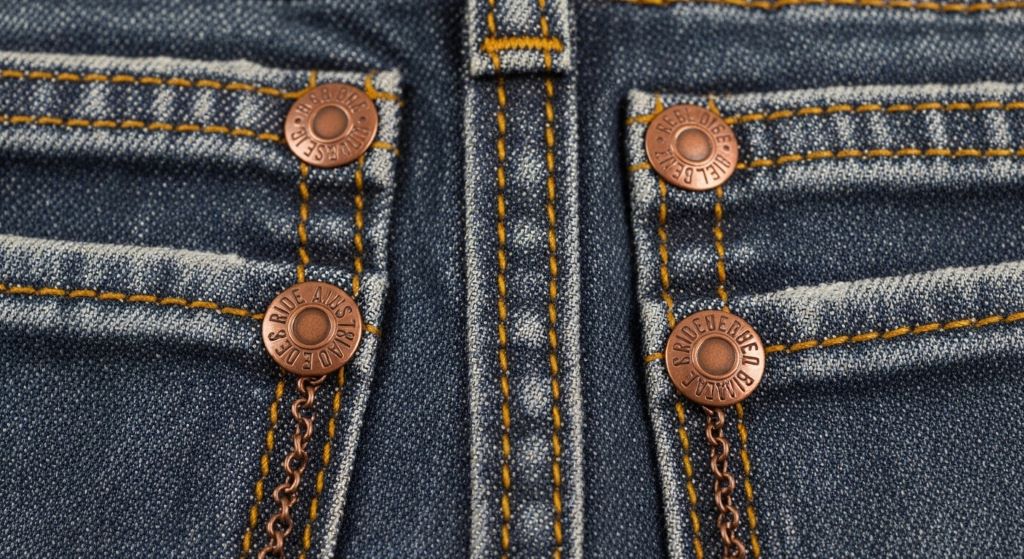
The small details on a garment often separate average pieces from exceptional ones. On jeans, look at the rivets, buttons, and zipper. Metal rivets should feel solid and be evenly placed. A YKK zipper or a branded metal zipper is a good sign. Cheap plastic zippers snag easily and break faster.
Buttons on jeans should feel heavy and substantial. Many high-quality brands use shank buttons or branded buttons with embossed logos. These are harder to replicate and signal attention to detail.
On trousers, look at the clasp or hook-and-bar fastening at the waist. It should close smoothly and hold firmly. A well-finished fly with neat stitching and a clean lining is also a good indicator of overall craftsmanship.
The Importance of Wash and Color Consistency
When buying jeans or dark trousers, examine the color closely. The dye should be even across the entire garment. Patchy or faded areas on a brand-new pair are a red flag.
For raw or selvedge denim specifically, some variation is expected. However, for most standard jeans, an even, deep color indicates quality dyeing. Additionally, check for colorfastness. Rub a white cloth gently against the fabric. If it picks up significant color, the dye is likely to bleed heavily after washing.
How Garments Age Over Time
A good pair of jeans or trousers should improve with age, or at the very least maintain its look and structure. Raw denim is famous for developing a personal patina over time. However, even standard denim should hold its shape and color reasonably well after multiple washes.
Before buying, check online reviews if possible. Look for comments about how the garment holds up after six months or a year. This kind of long-term feedback is far more valuable than first impressions. Therefore, take a few extra minutes to research before committing to a purchase.
Sustainable and Ethical Quality Markers
Today, quality also means responsibility. Many consumers now look for brands that are transparent about how their garments are made. Certifications like GOTS (Global Organic Textile Standard) or Fair Trade labels indicate that the product meets environmental and ethical standards.
Additionally, brands that offer repair services or lifetime guarantees are confident in their construction. This kind of commitment is a strong signal of genuine quality. Choosing these brands also means your clothes are less likely to end up in landfill after a few uses.
Conclusion
Identifying a high-quality, well-fitted pair of jeans or trousers does not require expert knowledge. It simply requires attention to detail. Check the fabric content, inspect the stitching, assess the hardware, and always try the garment on before buying. Pay attention to how it fits across the waist, seat, and thigh. Look at the small details like pocket depth, belt loops, and zipper quality.
Additionally, consider how the garment will age over time and whether the brand stands behind its product. A little time spent evaluating these factors will save you money and frustration in the long run. The right pair, chosen carefully, can become one of the most dependable pieces in your wardrobe for years to come.
Frequently Asked Questions
How do I know if jeans are made from high-quality denim?
Look for a tight weave, heavier fabric weight (around 12–14 oz for denim), selvedge construction, and a clean finish on the inside seams. These are reliable signs of quality denim.
What is the ideal fit for trousers in a professional setting?
For formal or smart-casual wear, trousers should sit cleanly at the waist, have a smooth fall through the thigh, and end with a slight break at the shoe. There should be no visible pulling or sagging.
How many times should I wash jeans before assessing colorfastness?
Wash your jeans inside out in cold water for the first two or three washes. If the color remains deep and consistent, the dye quality is good. Significant fading early on suggests poor dyeing.
Are expensive brands always better quality?
Not necessarily. Price can reflect marketing costs, brand heritage, or retail markups rather than fabric or construction quality. Always assess the garment itself using the criteria above, regardless of the label.
What does “selvedge denim” mean and why does it matter?
Selvedge denim is woven on old-style shuttle looms, producing a tightly woven, self-finished edge. This method creates a denser, more durable fabric that tends to age beautifully and resist fraying over time.
Related Topics:
The Power of Your Palette: A Deep Dive into Color Psychology for Outfit Choices
The Ultimate Guide to Wearing Yeezy Foam Runners with Any Outfit