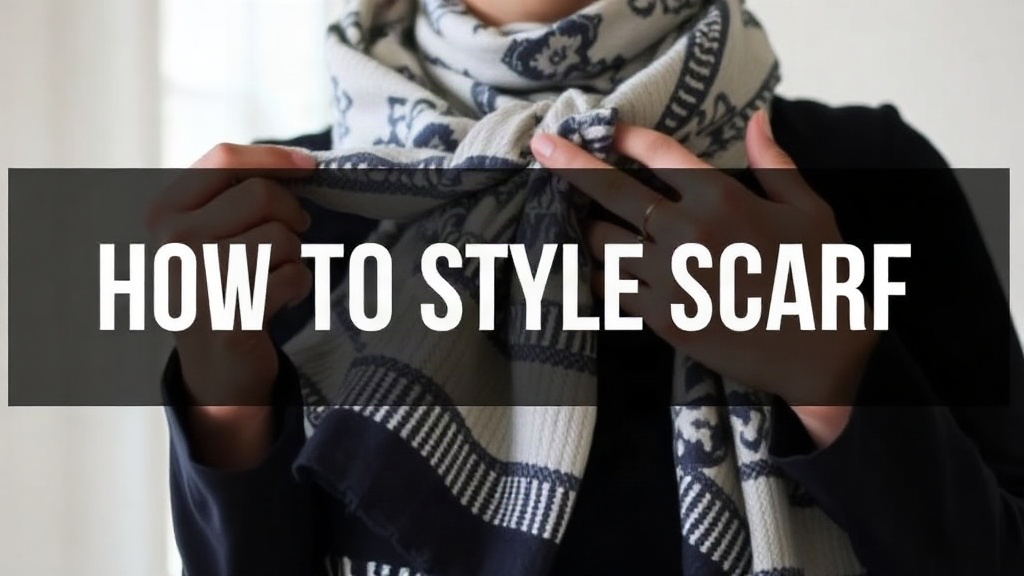
You bought a scarf you love, and now it sits in a drawer because you are not sure how to wear it without looking fussy. The real question is rarely which scarf to buy. It is how to style scarf so it suits your outfit, your face shape, and the weather in under two minutes.
Quick answer: Choose a scarf weight that matches the season and the neckline of your top, then pick one knot or drape that fits the occasion. Most looks fail because the fabric is too bulky or the knot sits too high, so keep the fabric light near the face and the volume lower on the chest. Practice two folds until they feel automatic.
This guide walks through preparation, six core styling steps, tips for better results, and the mistakes that flatten a good outfit. You will finish with a repeatable routine you can use every morning.
What you need before starting
Good styling starts with the right materials, not the right technique. Gather these items first so you are not improvising in front of a mirror.
A scarf that suits the season. Lightweight cotton, silk, and linen work for warm weather. Wool, cashmere, and blends hold their shape in cold air. A winter scarf that is too thick will bunch under a coat collar.
A mirror at chest height. A full-length mirror lets you see proportion, not just the knot. If you only have a bathroom mirror, step back a few feet.
The outfit you plan to wear. Style the scarf against the actual neckline. A knot that works over a crew-neck sweater can crowd a collared shirt.
Two or three ways to secure it. A simple knot, a belt, or a scarf ring covers most situations. You do not need special hardware, though a ring helps with slippery silk.
A steamer or iron. Wrinkled fabric never drapes well. A quick pass with steam relaxes the fibers and helps folds hold.
Silk and wool usually need low heat or steam only. Test on a hidden corner before pressing the full length.
Match the scarf to the neckline
The neckline decides where the scarf sits and how much volume you can carry.
| Neckline | Best scarf weight | Simple styling move |
|---|---|---|
| Crew neck | Medium, textured | Single loop with ends hanging |
| V-neck | Light, fluid | Loose drape tucked inside |
| Button-down collar | Light to medium | Knot below the collar point |
| Turtleneck | Light, long | Wrap once, tuck both ends |
Notice the pattern: heavier fabric pairs with higher, plainer necklines, and light fabric pairs with open necklines. A chunky knit wrapped over a turtleneck creates a double layer of bulk at the throat.
Consider your face shape and height
Long rectangular scarves add vertical lines, which flatters rounder faces. Square or blanket scarves create width, which suits narrow faces. If you are petite, keep the hanging ends above the waist so they do not cut your silhouette in half. Taller frames can carry longer tails and larger folds.
Confirm your goal for the day
Decide whether the scarf is the focal point or a supporting layer. A bright printed scarf against a plain coat is the focal point, so keep jewelry minimal. A neutral scarf in a textured knit supports the outfit, so a necklace or earrings can stay.
You now have fabric, tools, and a goal. Next comes the practical sequence.
Step-by-step instructions

These six steps take most people under five minutes once practiced.
Step 1: Choose your scarf and check the condition
Lay the scarf flat and look for pulls, pills, or creases. Smooth any wrinkles with steam. A scarf that looks cared for reads as intentional; a crumpled one reads as an afterthought. Outcome: a clean, flat scarf ready to fold.
Step 2: Match the scarf to your outfit’s color
Pick one color from your outfit and let the scarf echo it, or choose a shade one step lighter or darker. If your outfit is monochrome, a scarf in a contrasting tone gives the whole look a lift. Outcome: a color decision you can explain in one sentence.
Step 3: Fold the scarf to your chosen width
For a long rectangular scarf, fold it in half lengthwise for a neat band, or leave it open for a soft drape. Square scarves work best folded on the diagonal into a triangle. Outcome: a shape that sits flat against your chest.
If you can feel the scarf pressing against your jaw, it is too bulky. Refold to a narrower band before tying.
Step 4: Set the length before you knot
Drape the scarf around your back and check where the ends fall. For a loop knot, the ends should sit just below the sternum. For a drape, let one side hang longer than the other by about four inches. Outcome: balanced proportions before any tying begins.
Step 5: Tie the knot or secure the drape
Loop the scarf once around your neck, then pull one end through the loop for the classic Parisian knot. For a drape, cross the ends once at the chest and tuck them under a belt. For a triangle, tie the two corners behind your neck and let the point fall forward. Outcome: a secure shape that holds without constant adjustment.
Step 6: Adjust and check in the mirror
Tug the knot slightly off-center, loosen the loop by a finger’s width, and check the mirror from three angles. A little asymmetry looks relaxed; perfect symmetry can look stiff. Outcome: a finished look you can repeat tomorrow.
Tips for better results
Small adjustments separate a styled scarf from a wrapped one. These tips apply across fabrics and occasions.
Let the knot sit slightly low
A knot directly under the chin can look tight and shorten the neck. Drop it two finger-widths lower and the same scarf reads more relaxed. This matters most with turtlenecks and high collars.
Use a scarf ring for slippery fabric
Silk slides loose within an hour. A simple ring keeps the ends in place and adds a small metal accent that suits both office and evening outfits. If you do not own one, a slim belt works for longer scarves.
Vary the drape with the occasion
A single loop reads casual. A tight double wrap reads cold-weather practical. One loose drape with the ends tucked reads polished for a meeting. Pick the version that matches the room.
Balance print and pattern
If your outfit carries a pattern, choose a solid scarf. If the outfit is solid, a patterned scarf can carry the whole look. Two busy patterns compete; they rarely cooperate. For more on mixing, see our guide to building a capsule wardrobe.
Keep the tail length in proportion
As a rule of thumb, keep tails above the widest part of your hips if you are shorter than about 5’4″. Longer tails draw the eye downward. Taller frames can wear longer ends without losing balance.
Store scarves so they stay ready
Fold knit scarves flat in a drawer and hang silk ones on a padded hanger. Creased folds pressed for weeks take longer to relax than a quick steam before wearing.
The same long scarf can be a loop, a drape, or a triangle. Changing the fold is faster and cheaper than changing the outfit.
Common mistakes to avoid
Most styling problems trace back to a few predictable errors. Fixing these raises the quality of every look.
Wearing too much fabric near the face
A bulky scarf crowds the jaw and can overwhelm smaller features. If the scarf is thick, wear it lower on the chest or wrap it once instead of twice. Your face should stay the clearest part of the frame.
Ignoring the outfit’s existing volume
Coats with large collars, puffer jackets, and oversized knits already add bulk. Adding a chunky scarf on top creates a shapeless silhouette. Choose a lighter scarf with high-volume outerwear and let the layers do the work.
Choosing a color that fights the skin tone
Scarves sit close to the face, so their color influences how your complexion reads. Harsh tones can wash out warm skin; very cool tones can gray it. Hold the scarf under your chin in daylight and judge honestly.
Tying too tightly
A tight knot restricts movement and looks uncomfortable. Leave room for a finger between the scarf and your neck, and check that you can turn your head freely. Comfort shows in how you carry yourself.
Wool that has pilled or silk that has lost its sheen will not drape cleanly. A fabric shaver and gentle hand washing restore most scarves.
Over-accessorizing
A patterned scarf plus a statement necklace plus large earrings competes for attention. Choose one focal point and let the rest stay quiet. If the scarf is the star, skip the necklace.
Forgetting to test the look in motion
A knot that looks fine standing still may slip when you sit, walk, or take off a coat. Test the style while moving before you commit to it for the day.
FAQ
How long should a scarf hang when styled?
Most styles work best with ends falling between the waist and the hips. Shorter tails look tidy with fitted tops, while longer ends suit tall frames and loose coats. Check the length before tying; readjusting a knot later rarely looks as clean.
Do I need special tools to style a scarf?
No. A mirror and a steamer cover most needs. A scarf ring helps with slippery silk, and a thin belt helps secure long drapes. Everything else is technique.
Which scarf fabric is easiest for beginners?
Cotton and soft wool blends are the most forgiving. They hold a knot without slipping and resist deep creasing. Silk looks elegant but needs more practice and usually a ring to stay in place.
Can a scarf work in warm weather?
Yes, if you choose lightweight cotton, linen, or silk and keep the wrap loose. A thin scarf worn open adds color without trapping heat. Avoid bulky knots in humidity.
How do I stop a scarf from slipping?
Loosen the knot slightly and add friction with a scarf ring, a belt, or a textured knit underneath. Silk on silk slips most; silk on cotton holds far better. A quick test walk tells you if the knot will stay.
Conclusion
Styling a scarf comes down to weight, neckline, and one deliberate knot. Match the fabric to the season and outfit, keep the volume low near your face, and practice two folds until they feel automatic. Most of the polish comes from small adjustments, not expensive accessories.
Start tomorrow by picking one scarf and trying the loop, the drape, and the triangle in front of a full-length mirror. Save the version you like most so it becomes your default. If this look leads you toward coordinating pieces, our article on seasonal capsule outfits gives you a practical next step.