
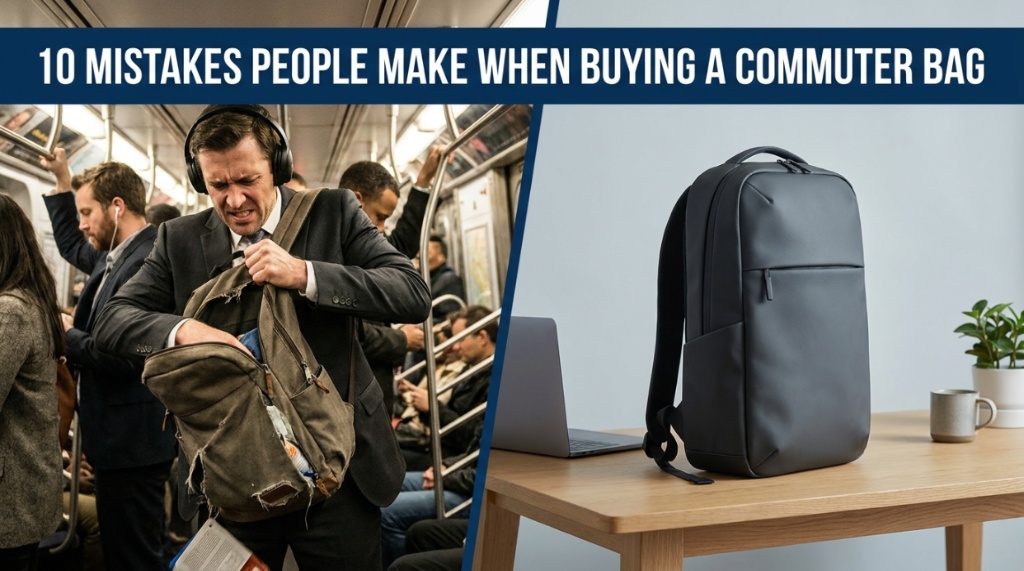
I’ve watched a coworker buy four different commuter bags in eighteen months — each one abandoned after a few weeks because of a flaw that was completely predictable before purchase. Strap too thin, laptop sleeve too shallow, no water bottle pocket, zipper that jammed in week three. Every one of these failures was avoidable with five minutes of informed evaluation. The commuter bag market is designed to sell you on aesthetics while hiding functional deficiencies that only reveal themselves after the return window closes. These ten mistakes cost buyers $200–$500 in wasted purchases annually — money that could have bought one excellent bag that lasts five years instead of four mediocre bags that each last four months.
Over 70% of commuter bag returns happen within 60 days of purchase, according to retail industry data from 2024. The reasons are consistent: comfort issues under real load, organization that doesn’t match actual daily carry, and materials that show wear embarrassingly fast. These aren’t manufacturing defects — they’re buying mistakes made by people who evaluated bags empty in a store instead of loaded on a commute. Here are the ten most expensive mistakes and exactly how to avoid each one when choosing your next commuter bags purchase.
Mistake #1: Buying Based on Looks Instead of Load
The most common mistake is choosing a commuter bag based on how it looks empty on a shelf rather than how it performs loaded with your actual daily items during a real commute.
Why this fails:
- A bag that looks sleek empty may bulge awkwardly when loaded with a laptop, lunch, and water bottle
- Thin materials that look premium in-store show every item’s outline when packed
- Unstructured bags collapse and look sloppy the moment you set them down
- Color that looks great under store lighting shows every scuff and stain in natural light
The fix: bring your actual daily items to the store. Pack the bag completely. Walk around for 10 minutes. Set it down and evaluate how it looks loaded. If you’re buying online, order from retailers with generous return policies and test at home with a full load before removing tags.
Mistake #2: Ignoring Strap Comfort Until It’s Too Late
Strap comfort is invisible during a 2-minute store try-on but becomes the dominant factor in bag satisfaction after 20+ minutes of loaded carry — and it’s the #1 reason commuters abandon otherwise good bags.
Strap problems that emerge only under real use:
- Thin straps (under 2 inches wide): Dig into shoulders under 8+ lbs of load. Causes pain within 15 minutes.
- Non-contoured straps: Straight straps slide off shoulders constantly, requiring constant adjustment.
- No load lifters: Weight hangs low, pulling shoulders back and causing upper back fatigue.
- Unpadded messenger straps: Single-shoulder carry with thin strap creates chronic neck and shoulder imbalance.
The fix: test with 10–15 lbs of weight for at least 15 minutes. Quality straps should feel comfortable at 20 minutes. If they hurt at 5 minutes empty, they’ll be unbearable loaded.

Mistake #3: Choosing the Wrong Size
Buying too large wastes space and adds unnecessary weight. Buying too small forces overpacking that stresses zippers and seams. Both mistakes lead to bag replacement within a year.
Size selection framework:
| Daily Carry | Recommended Size | Common Mistake |
|---|---|---|
| Laptop + charger + wallet only | 12–18L | Buying 30L “just in case” |
| Laptop + lunch + essentials | 18–25L | Buying 15L and overstuffing |
| Laptop + gym clothes + full day | 25–32L | Buying 20L and using external bags |
The fix: list everything you carry daily. Measure the total volume. Add 15–20% for breathing room. Buy that size — not larger, not smaller.
Mistake #4: Skipping Water Resistance in Rainy Climates
Choosing a non-water-resistant bag in a city with regular rainfall guarantees water damage to electronics, documents, and the bag itself within the first season of use.
Water resistance levels explained:
- Water-resistant (DWR coating): Repels light rain for 10–15 minutes. Adequate for dash-to-cover situations. Needs reapplication every 6–12 months.
- Weatherproof (sealed seams + coated fabric): Handles moderate rain for 30+ minutes. Good for commuters who walk in rain regularly.
- Waterproof (welded seams + roll-top or sealed zippers): Handles heavy rain indefinitely. Necessary for cyclists or commuters with extended outdoor exposure.
The fix: if you commute on foot or by bike in a city with more than 80 rainy days per year, minimum weatherproof rating is essential. Sealed zippers alone add significant protection over standard zippers.
Mistake #5: Buying Cheap Zippers
Zipper failure is the #1 mechanical reason commuter bags get replaced. Cheap zippers jam, separate, or lose teeth within 6–12 months of daily use — rendering an otherwise functional bag useless.
Zipper quality indicators:
- YKK brand (gold standard): Used by premium bag makers worldwide. Smooth operation, self-healing teeth, 10+ year lifespan.
- RiRi (luxury): Swiss-made, found in high-end bags. Exceptional smoothness and durability.
- SBS (acceptable): Chinese manufacturer, decent quality for mid-range bags. 3–5 year lifespan with daily use.
- Unbranded (avoid): No quality control, inconsistent teeth spacing, prone to jamming and separation. Common in bags under $50.
The fix: check zipper brand before buying. Pull the zipper across its full length — it should glide smoothly without catching. Metal zipper pulls last longer than plastic. If the bag doesn’t specify zipper brand, assume the cheapest option.
Mistake #6: Neglecting Laptop Compartment Quality
A laptop “pocket” is not a laptop “compartment.” Many bags advertise laptop compatibility but offer only a thin fabric sleeve with no padding, no suspension, and no separation from the main compartment — leaving your $1,500 device vulnerable to every bump and drop.
What proper laptop protection requires:
- Dedicated compartment separate from main storage
- Minimum 1cm closed-cell foam padding on all sides
- Suspended design (laptop doesn’t touch bag bottom)
- Secure closure (velcro, magnetic, or zipper)
- Snug fit (laptop shouldn’t slide freely within the sleeve)
The fix: put your laptop in the sleeve and shake the bag gently. If the laptop moves more than half an inch in any direction, the sleeve is too loose. Press on the outside of the laptop compartment — if you can feel the laptop easily through the padding, it’s too thin.
Mistake #7: Forgetting About the Commute-to-Meeting Transition
A bag that looks great on a subway platform may look completely wrong in a boardroom. Many commuters buy for transit comfort and forget they’ll carry the same bag into professional meetings, client offices, and business lunches.
Transition failures:
- Sporty backpacks with visible mesh and neon accents in corporate meetings
- Bags that collapse into shapeless lumps when set on a conference table
- Visible sweat stains on back panels after a warm commute
- Dangling straps and carabiners that look cluttered in professional settings
The fix: choose bags with clean lines, minimal external hardware, structured panels that maintain shape, and dark neutral colors. If you carry a backpack, look for models with hideaway straps or a clean back panel that looks professional when carried by the top handle.
Mistake #8: Overlooking Quick-Access Pockets
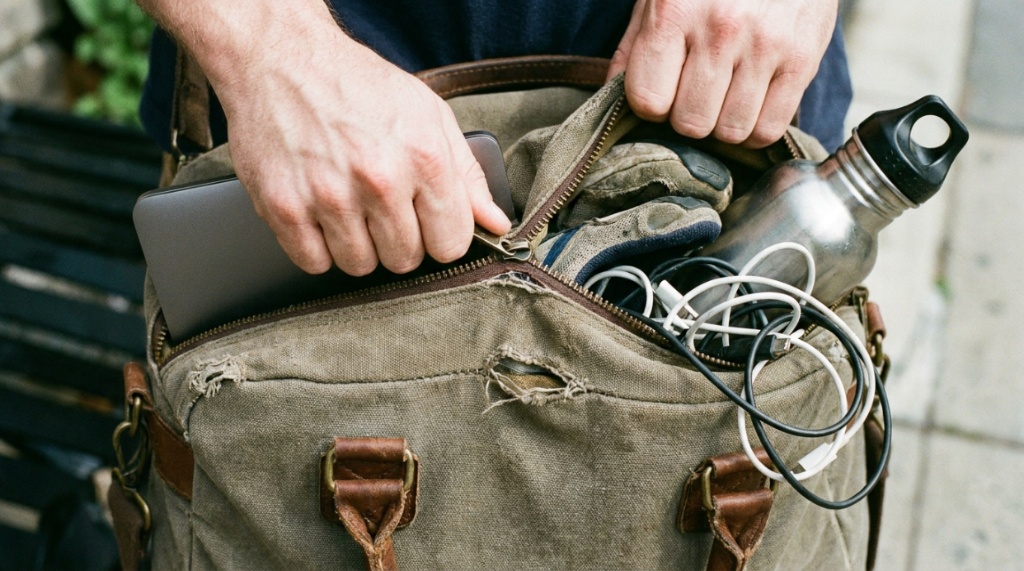
Without dedicated quick-access pockets, you’ll dig through your main compartment 10–15 times daily for your phone, keys, transit card, and wallet — wasting time and looking disorganized at every subway turnstile and office entrance.
Essential quick-access needs:
- Transit card/phone: External pocket reachable without opening any zipper — for tap-and-go transit systems
- Keys: Internal clip or dedicated pocket so they’re always in the same spot
- Wallet: Secure but accessible pocket — not buried under your laptop
- Sunglasses: Soft-lined pocket that prevents scratching
The fix: before buying, mentally walk through your morning commute. Every time you reach for something, that item needs a dedicated, accessible pocket. If the bag forces you to open the main compartment for any of these items, it fails the daily-use test.
Mistake #9: Buying Without Checking the Return Policy
Commuter bag problems often don’t appear until 2–4 weeks of daily use — well past many retailers’ return windows. Buying from stores with 14-day return policies means you’re stuck with a bag whose flaws haven’t revealed themselves yet.
Return policy requirements for smart buying:
- Minimum 30-day return window: Gives you enough daily commutes to identify comfort, organization, and durability issues
- No “used condition” restrictions: Some retailers refuse returns on bags that show any use. You can’t evaluate a commuter bag without commuting with it.
- Free return shipping (online): A $15–$30 return shipping fee on a $200 bag effectively makes it non-returnable for minor issues.
The fix: buy from retailers with 30+ day return policies that accept used-condition returns. REI (365 days), Nordstrom (flexible), and direct-from-brand websites often offer the best return terms. Keep packaging for 30 days minimum.
Mistake #10: Ignoring Total Cost of Ownership
Buying a $75 bag that lasts one year costs more over five years ($375) than buying a $250 bag that lasts five years. Yet most buyers evaluate only the purchase price, not the cost-per-year or cost-per-use.
Cost-per-use comparison:
- $75 bag, 1-year lifespan, 250 uses: $0.30 per use
- $150 bag, 3-year lifespan, 750 uses: $0.20 per use
- $250 bag, 5-year lifespan, 1,250 uses: $0.20 per use
- $350 bag, 8-year lifespan, 2,000 uses: $0.18 per use
The fix: divide the price by expected years of daily use. A bag that costs $0.15–$0.25 per use is well-priced regardless of sticker price. Anything over $0.30 per use means you’re either overpaying or buying disposable quality.
While ensuring your daily work pack can handle your laptop and lunch is crucial, your weekend or vacation needs might require a completely different approach to mobility. If you want to ditch the heavy bulk entirely on your days off, switching to a Lightweight Crossbody Bag for Travel Comfort ensures you can navigate new cities effortlessly without straining your shoulders.
Conclusion
Every commuter bag mistake on this list is preventable with informed evaluation before purchase. The pattern is consistent: buyers choose based on appearance, price, or impulse — then discover functional failures during actual daily use. The bag that looks perfect on a website or store shelf may be completely wrong for your specific commute, carry needs, and professional environment.
Avoid these ten mistakes by testing bags loaded with your actual daily items, prioritizing strap comfort and laptop protection over aesthetics, checking zipper quality and material durability, and buying from retailers with generous return policies. One informed purchase that lasts five years beats five impulse purchases that each disappoint within months. Your commuter bag is a daily-use tool — evaluate it like one.
Which of these mistakes have you made? Share your worst commuter bag purchase story in the comments — your experience helps other buyers avoid the same trap.
Frequently Asked Questions
What is the most common reason people return commuter bags?
Comfort issues under real load — specifically shoulder pain from thin straps, back sweat from unventilated panels, and weight imbalance from poor internal organization. These problems are invisible during a quick store try-on but become deal-breakers within 2–3 weeks of daily commuting.
How long should a good commuter bag last?
A quality commuter bag ($150–$350) should last 3–7 years of daily use (250+ days per year). Premium bags ($350+) with quality materials and construction last 7–10+ years. If your bag shows significant wear within the first year, it’s either poor quality or wrong for your use case.
Is it worth spending $300+ on a commuter bag?
Yes, if you commute daily and need the bag to last 5+ years. At $300 over 5 years of daily use, you’re paying $0.24 per use — cheaper than a $100 bag replaced annually ($0.40 per use). The $300 bag also looks better throughout its lifespan and provides superior comfort and protection.
What’s the biggest waste of money on a commuter bag?
Paying premium prices for brand logos rather than material quality and construction. A $500 designer bag with bonded leather and unbranded zippers will fail faster than a $200 bag with full-grain leather and YKK zippers. Evaluate construction, not labels.
Should I buy a commuter bag online or in-store?
In-store is better for evaluating comfort and organization with your actual items. Online is better for selection and price comparison. Best strategy: research and shortlist online, then test finalists in-store if possible. If buying online only, choose retailers with 30+ day return policies.
How do I know if a commuter bag is too heavy?
The bag itself should weigh under 3 lbs (empty) for daily commuting. Total loaded weight should stay under 15 lbs for comfortable all-day carry. If your bag empty weighs over 4 lbs, it’s adding unnecessary burden before you even pack your items.
What’s the one feature I shouldn’t compromise on?
Laptop protection. A suspended, padded, dedicated laptop compartment is non-negotiable for any professional commuter bag. Everything else (style, pockets, material) is preference. But inadequate laptop protection risks a $1,500+ device replacement — making it the highest-stakes feature in any commuter bag.